

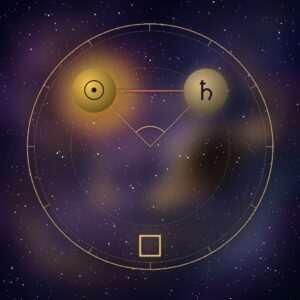
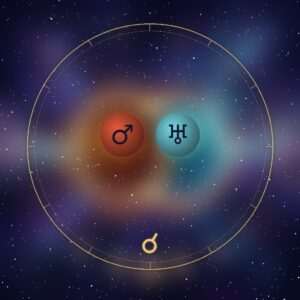

A T-Square is a dynamic pattern in a natal chart formed when two planets sit opposite each other and both square a third planet. In this article you will learn how a T-Square works, how it shows up in personality and life events, and practical steps to transform its pressure into momentum. Expect clear descriptions, real-life applications, and tactical tools you can try right away.
What is a T-Square?
A T-Square creates concentrated tension in a chart. Two planets oppose each other across the zodiac, and both make a 90° angle to a third planet. The third planet sits at the apex and receives the pressure created by the opposition. That apex acts like a fault line where energy both blocks and channels the horoscope’s drive.
This pattern does not doom you. It signals a concentrated focus and repeated life themes. The push-pull of the opposition asks for balance, while the square demands action. Together, they push you to solve a problem or express a talent with force.
How a T-Square forms in a chart
A T-Square forms through two simple, specific relationships: an opposition and two squares. Oppositions sit 180° apart and create polarity. Squares sit 90° apart and create friction. When those two aspects combine around a single planet, the chart forms a T-shaped geometry.
Whether all three legs hold at once depends on the margin you allow around each angle, which is why orbs in astrology decide how many T-Squares a chart appears to contain.
Look at signs and houses to read nuance. Cardinal T-Squares force starts and external change. Fixed T-Squares lock you into persistent patterns. Mutable T-Squares create internal confusion and a need to adapt. The signs involved color the problem and the solutions a person prefers.
T-Square energies: core dynamics
A T-Square supplies intense motivation. The opposition creates an inner tug-of-war, and the apex demands a decisive response. That dynamic can translate into drive, ambition, or chronic inner stress. Often it shows as impatience and a desire to prove oneself.
At its best, a T-Square sharpens focus and fuels achievement. At its worst, it creates burnout, projection, or repeated conflicts. The key lies in channeling the energy toward constructive projects rather than repeated arguments or avoidance.
T-Square personality traits and behavior
People with a strong T-Square often act with urgency. They may take bold stands and set high standards. They also feel pressure to resolve opposing demands. As a result, they show determination, competitiveness, and a low tolerance for drift.
Emotionally, they can swing between extremes. They might react quickly and then regret it. Socially, they can attract conflict while seeking support. With awareness, they turn friction into creativity, leadership, and honest self-expression.
T-Square challenges and growth paths
A major risk with a T-Square lies in using others to discharge tension. People can become critical, controlling, or overworked. They may sidestep emotional needs and focus solely on outcomes.
Growth requires two moves. First, recognize your apex as a skill to develop. Second, practice flexible responses instead of repeated force. Over time, the tension that once burned you out becomes a reliable engine for purposeful action.
Practical strategies for working with tension
Start by naming the axis and apex in your chart. That simple mapping makes choices clearer. Next, create short rituals to release pressure, such as brisk exercise, timed creative sprints, or focused breathing.
Set structure around projects. Break aims into weekly goals and track progress. Use accountability rather than perfectionism. When conflict flares, pause and ask which outcome you actually want. Then choose one small action that moves you toward that outcome.
Also build allies who offer perspective. A trusted listener helps you spot repeated patterns. Finally, schedule recovery. Energy replenishes faster when you respect limits.
Using transits and progressions to time changes
Transits activating any leg of a T-Square will intensify the pattern. When a slow planet touches the apex, expect breakthroughs or crisis. Short-term transits to the opposition points can reveal hidden trade-offs.
Progressions can soften or sharpen squares over years. Watch for periods when the tension eases; that window offers a chance to implement lasting changes. In practice, plan major moves when activation aligns with supportive transits rather than during heavy, conflicting ones.
Famous examples and chart case studies
Charts with strong T-Squares often appear in the lives of high achievers, activists, and artists. Rather than naming individuals, imagine two sketches. In the first, a leader channels the apex into public service and becomes known for steady crisis management. In the second, a creative person converts internal friction into bold art that challenges norms.
These sketches show a pattern: the same pressure that causes turmoil can become a platform. The difference lies in skillful use of tension and honest self-reflection.
Frequently Asked Questions (FAQ)
Q: Does a T-Square mean I will always struggle?
A: No. A T-Square indicates recurring pressure, not inevitable failure. With awareness and strategy, the pattern can become a source of focus and achievement.
Q: Which planet matters most in a T-Square?
A: The apex planet matters most. It acts as the focal point for action and growth. Learn the apex sign and house to understand where energy must flow.
Q: Can a T-Square be resolved?
A: It rarely disappears, but it can transform. Transits, progressions, and conscious work change how you respond. Over time, a T-Square can lose its destructive edge.
Q: How do I spot a T-Square in my chart?
A: Look for one planet making squares to two others that oppose each other. If you use chart software, check aspect listings for two squares and one opposition tied to the same planet.
Q: Is one type of T-Square easier than another?
A: Cardinal, fixed, and mutable T-Squares each pose different tasks. Cardinal demands action, fixed asks for persistence, and mutable requires flexibility. None ranks strictly easier; each fits different temperaments.
Q: Should I mention my T-Square to clients or partners?
A: You can use the pattern as a frame for growth. Share what you learn about your triggers and coping tools. That transparency often improves relationships.
Glossary of key terms
- Apex: The planet that squares both opposing planets; the focal point of a T-Square.
- Opposition: An aspect of 180° that creates polarity and choices.
- Square: A 90° aspect that creates tension and the need for adjustment.
- Natal chart: A map of planetary positions at the moment of birth.
- Transit: A current planetary position that interacts with your natal planets.
- Progression: A symbolic chart movement that shows inner development over time.
- Cardinal/fixed/mutable: Modalities that describe how signs approach action and change.
Go deeper with your personal Astrovision report
Reading about astrological concepts is a great start, but nothing compares to hearing how they apply directly to you. Our users love our audio-first approach, calling it “friendly, personal, and easy to understand.” While this article gives you the “what,” a personal report gives you the “so what.” Discover your unique path with an Astrovision report—your personal ‘user manual’ delivered in our celebrated podcast format.